
AI Search Is Changing How Customers Choose a Business
Here’s what actually works… A recent analysis by digital marketing analysts at Ahrefs found that Google’s AI Overviews (the AI-written summaries that now appear above normal search results) cut clicks to the top-ranking website by 58%. Not eventually. Now. Every day, more of the people who’d once have landed on your website are getting their answer from an AI summary instead, often without ever seeing your name.
That’s the uncomfortable part. The useful part is this: the businesses winning inside that shift aren’t doing anything exotic. They’re doing the same things that have always separated a credible business from a forgettable one, just with the added job of making that credibility visible to AI tools as well as people.

Lee Watts
, Technical Director
October 5, 2026
Your website now has two audiences
For years, a website only had to work for two things: the person reading it, and the search engine ranking it. That’s no longer the whole picture.
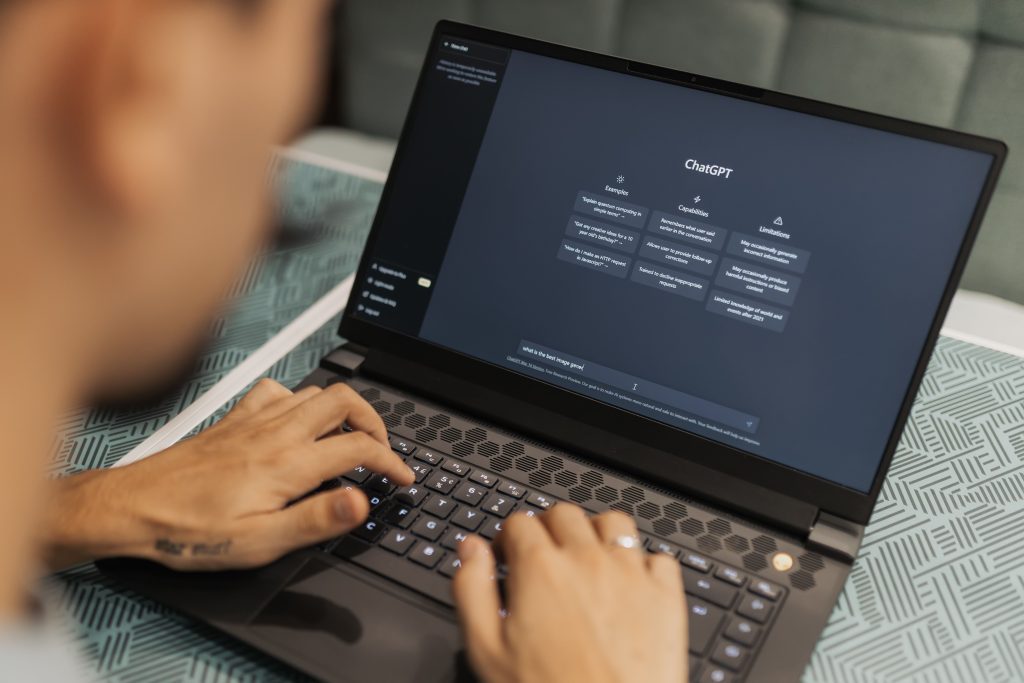
Someone thinking about switching accountant, hiring a solicitor, or finding a marketing agency might now ask ChatGPT to explain their options, read a few reviews, skim two or three websites, then go back to Google with a much more specific question. By the time they get in touch, they’ve often done more research than they would have five years ago, much of it without you knowing it happened.
That means you’re now being judged twice: once by the person, and once by whatever AI tool helped that person get there. A website that’s vague about what it does and thin on evidence gives both of them very little to work with.
Genuine expertise still wins
There’s some reassuring evidence behind this. One study of 75,000 well-known brands looked at what actually predicts whether a business gets mentioned by ChatGPT, Google’s AI tools, and similar platforms. Backlinks and the number of pages on a website barely made a difference. What mattered was being genuinely talked about elsewhere: in articles, reviews, and video, in your own words and other people’s.
In other words, publishing content for the sake of it isn’t the answer. Most businesses already hold more useful knowledge than their website lets on: the questions their team answers every week, the problems they’ve solved for clients, the details only someone with real experience would know. Sharing that, properly and specifically, does more for visibility than any quick technical fix, and it’s exactly the kind of work our content strategy team helps clients get out of their heads and onto the page.
Two things you don’t need to worry about yet
Because AI search is new, it’s attracted a few shortcuts that sound smarter than they are. Worth naming two of them, since we’d rather tell you the truth than sell you a tactic.
A file called llms.txt. Some agencies recommend adding a small text file to your website that’s meant to help AI tools understand it. One study covering over 130,000 websites found that 97% of these files never got a single visit, from anyone, AI tools included. It’s not likely to hurt you, but it’s not worth prioritising either.
Schema markup on its own. This is a bit of hidden code added behind the scenes of a webpage to describe what’s on it. A controlled test tracking almost 2,000 pages that added this code found no meaningful increase in AI mentions afterwards. Pages that do get mentioned by AI are more likely to have this code, but that’s because well-built websites tend to have good technical foundations generally, not because the code itself is doing the work.
Neither of these will hurt you. But if someone tells you either one is the answer to AI visibility, that’s not backed by the evidence.
This isn’t a reason to drop traditional SEO
With so much noise around AI, it’s tempting to think conventional SEO is on its way out. The research says otherwise: even fully AI-written pages can occasionally rank at the top of Google, but the vast majority of top-ranking pages are still mostly human-written. What actually gets a page filtered out isn’t AI, it’s thin, generic content, which AI just makes cheaper to produce at scale.
Fast, well-structured, technically sound websites still matter. Local visibility still matters. The work now is bringing technical performance, content, and structure together as one connected story, rather than treating each as a separate task.
What to actually do next
- Write down what your team already knows. The recurring client questions, the sector nuances, the things you’d explain in a five-minute call. That’s the content search engines and AI tools have the least of, and want the most.
- Back up your claims with proof. Case studies, testimonials, and specific examples do more for credibility, human and artificial, than another paragraph about being “trusted” and “experienced.”
- Structure content around real questions. Headings and sections that mirror how someone would actually ask a question, whether typed into Google or asked to ChatGPT, are far easier for AI tools to pick out and use.
- Keep the technical foundations solid. Fast load times, a clean structure, and a site that’s genuinely easy to use for a human still underpin everything above it, and it’s the kind of thing our website support and maintenance service is built around.
A few quick questions, answered
Do I need to add schema markup to my website?
It’s good practice for technical housekeeping, but on its own it won’t get you mentioned by AI tools. Don’t let anyone sell it to you as a quick fix.
Do I need an llms.txt file?
Almost certainly not yet. The evidence shows barely anyone, human or AI, is reading them.
Can my business show up in AI search if it doesn’t rank well on Google?
Yes, to a point. AI tools increasingly pull from a wider pool of websites than Google’s first page, but ranking well is still one of the strongest signs that a website will be picked up.
What’s the single biggest factor in AI visibility for a small business?
Being genuinely, verifiably talked about, in reviews, articles, and elsewhere online, not just claimed on your own website.
Is your website ready for how people search now?
At Kee Digital Media, this is exactly the shift we’ve built our approach around for clients across Glasgow, Manchester, and further afield. We look beyond rankings alone, at your content, technical performance, and the proof points that build trust with people and AI tools alike.
If you’re not sure how your website currently stacks up, we can take a look. Our team will review your site and search presence to flag the gaps, from technical SEO to missing evidence of expertise, and show you exactly where the opportunity is.