

What Is AI Search?
AI search is a way of retrieving information where an artificial intelligence model generates a direct answer to your query, rather than showing you a list of links to websites. You may also see it referred to as Generative Engine Optimisation (GEO) or AI SEO. Different people use different terms, but they all describe the same goal: getting your brand cited in the answers AI tools produce.
Instead of returning ten blue links and letting you decide which one to click, AI search tools read multiple sources, synthesise the information, and present you with a summarised answer. Sometimes they cite the sources they used. Sometimes they don’t.
According to research by Ahrefs, the presence of an AI Overview now correlates with a [58% lower average click-through rate](https://ahrefs.com/blog/ai-overviews-reduce-clicks-update) for the top-ranking page. That means ranking number one no longer guarantees the traffic it once did. If your content isn’t being cited inside the AI answer itself, you’re increasingly invisible to a significant portion of your potential audience.
Google introduced AI Overviews (previously Search Generative Experience) in 2024, adding AI-generated answer boxes to standard search results. Alongside this, tools like ChatGPT and Google’s Gemini are being used directly as search alternatives. People type in a question and get an answer without visiting a single website.
For businesses, this creates both a challenge and an opportunity. The challenge: if someone gets their answer directly from an AI, they may never click through to your site. The opportunity: if your content is what the AI cites, your brand appears in the answer itself, in front of someone who is actively looking for what you offer.
We’re already seeing this with clients in sectors like legal and property, where prospective customers research heavily before making contact. When someone asks an AI tool “what should I look for in a solicitor in Glasgow”, the firms whose content is well-structured and authoritative are the ones showing up in the answer. Those relying solely on traditional rankings are starting to get passed over.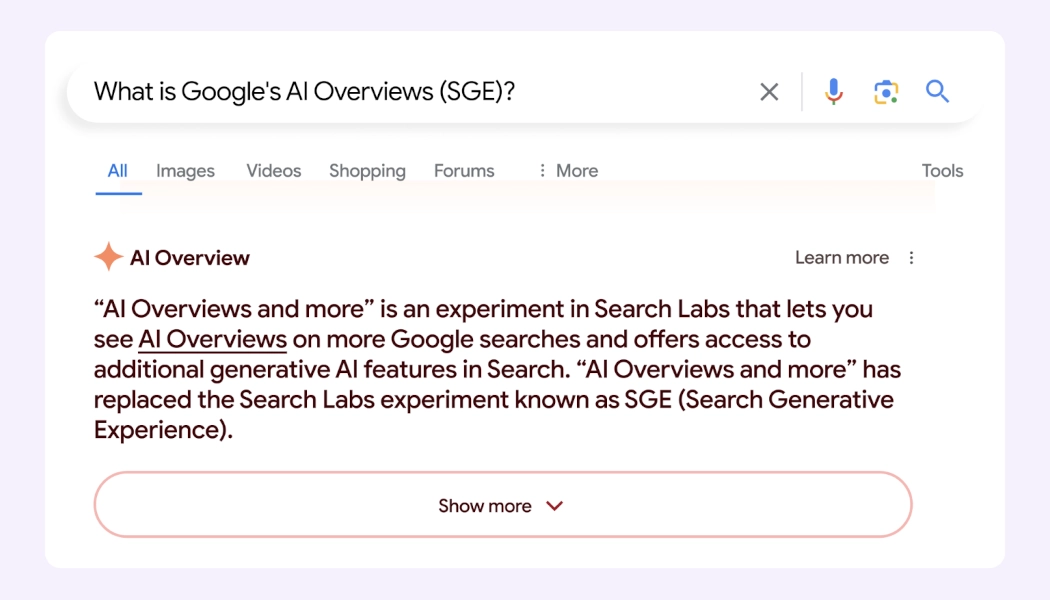
How Is AI Search Different From Traditional SEO?
Traditional SEO is about helping your website rank in a list of search results. You optimise your pages for specific keywords, earn backlinks from other sites, and work to appear as high as possible in that list. The goal is a click.
AI search works differently. When an AI tool generates an answer, it isn’t ranking your page. It’s deciding whether your content is credible, relevant, and clear enough to inform its response. The goal shifts from ranking to being cited.
Here’s where the two approaches diverge:
| Traditional SEO | AI Search Optimisation | |
| Goal | Rank in search results | Be cited in AI-generated answers |
| Success metric | Click-through rate, rankings | Brand mentions, citation rate |
| Content focus | Keyword density, backlinks | Clarity, authority, structured answers |
| Format | Any optimised page | Direct answers, FAQ schema, structured data |
| Algorithm | Google’s ranking system | AI model training and retrieval |
It’s worth being clear: traditional SEO hasn’t stopped mattering. A well-optimised site with strong technical foundations is still the base everything else sits on. AI search adds a layer on top of that, not a replacement for it. A site that Google can’t properly crawl is a site that AI tools are less likely to trust either.
What Types of AI Search Are There?
AI search isn’t one thing. There are several tools in the market right now, and they work in slightly different ways. Here’s a quick breakdown of the main ones:
Google AI Overviews
This is the most significant one for most businesses. Google AI Overviews appear at the very top of search results for a wide range of queries, and they’re generated directly by Google using its Gemini AI. Because Google still dominates search in the UK, appearing in AI Overviews represents the biggest opportunity for most of our clients.
The sources Google cites in AI Overviews tend to be pages that already rank well organically. That means your traditional SEO foundations still matter here, but the content itself needs to be structured in a way that makes it easy for AI to extract and cite.
ChatGPT Search
OpenAI launched ChatGPT Search as a feature within ChatGPT, allowing users to ask questions and receive AI-generated answers with web citations. It’s growing quickly, particularly among tech-savvy users and professionals. If someone asks ChatGPT “which digital marketing agencies are in Glasgow”, you want KDM to be part of that answer.
Microsoft Copilot
Copilot is built into the Microsoft ecosystem, including Bing, Edge, and Microsoft 365. For businesses targeting corporate or enterprise clients, Copilot is worth thinking about, since it’s the AI tool many professionals are already using inside their daily tools without necessarily realising it.
What They All Have in Common
Despite their differences, all of these tools share one behaviour: they look for content that clearly and directly answers questions, comes from credible and well-structured sources, and can be parsed quickly. That’s the common thread running through everything we do when we optimise for AI search.
How Do You Optimise for AI Search?
AI search optimisation isn’t a single tactic. It’s a combination of technical, content, and authority signals working together. Here’s what we focus on when we’re optimising a site to perform in AI-generated answers.
1. Answer Questions Directly
AI tools are designed to find direct answers. If your content buries the answer to a question three paragraphs down, AI is less likely to surface it. We structure content so the key answer appears early and clearly, with supporting detail following afterwards. Think of it as writing for someone who wants the short version first and the full explanation second.
2. Use FAQ Schema Markup
Schema markup is code that tells search engines what kind of content is on your page. FAQ schema specifically marks up question-and-answer pairs, which makes it much easier for AI tools to identify and extract answers to cite. Every piece of content we publish includes relevant schema markup, and FAQ sections are one of the most effective ways to pick up AI citations.
3. Build E-E-A-T Signals
E-E-A-T stands for Experience, Expertise, Authoritativeness, and Trustworthiness. It’s a framework Google uses to evaluate content quality, and AI tools use similar signals when deciding which sources to cite. In practice, this means:
- Publishing content under named authors with genuine credentials
- Earning backlinks from relevant and respected sources
- Keeping content accurate and up to date
- Demonstrating real-world experience with the topics you cover
This is one of the reasons we assign blog posts to the team members who actually do the work, rather than publishing everything under a generic company name. It makes the experience and expertise signals more credible.
4. Write for Clarity, Not Just Keywords
Traditional SEO encouraged writing around specific keyword phrases, sometimes to the detriment of natural readability. AI search rewards clarity above keyword density. If your content is easy to read, well-structured, and genuinely useful, it performs better across the board, for both traditional rankings and AI citations.
5. Earn Mentions and Citations Beyond Your Own Site
AI tools don’t only look at your own website. They consider what other sources say about you. Press coverage, industry directory listings, guest content, and reviews all contribute to your overall authority. The more credible third-party mentions you have, the more likely AI tools are to treat your brand as a trustworthy source.
6. Keep Your Technical SEO Foundations in Order
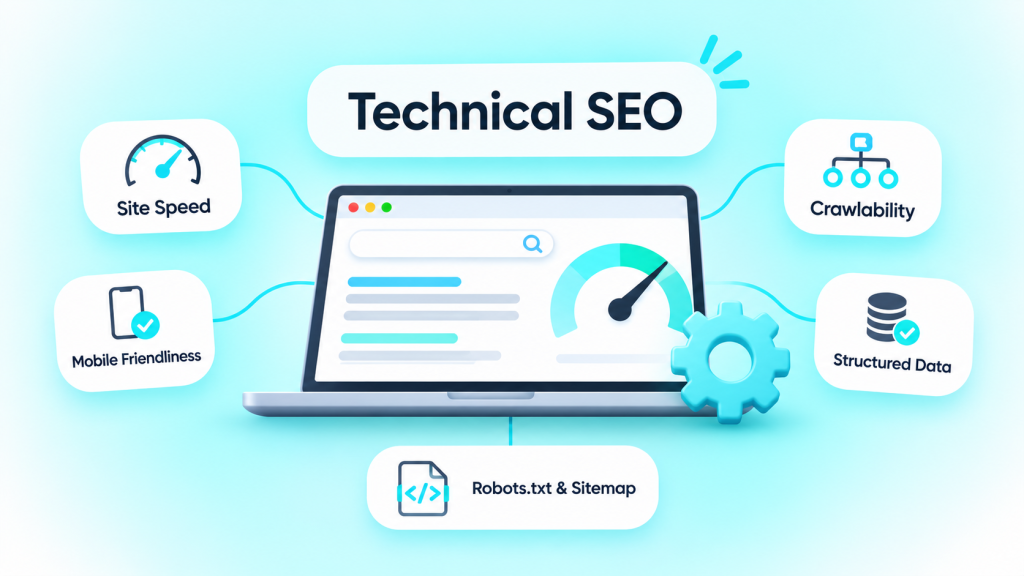
If AI tools can’t crawl your site properly, they can’t cite it. Page speed, mobile optimisation, proper indexing, clean site structure, and well-written meta data all feed into how reliably your content is discovered. This is something we cover as part of our broader SEO services, and it’s just as important for AI search as it is for traditional rankings.
Put all of this together and you have a content strategy that works for users, for Google, and for the AI tools that are increasingly shaping how people find information online.
How to Track Your AI Search Performance
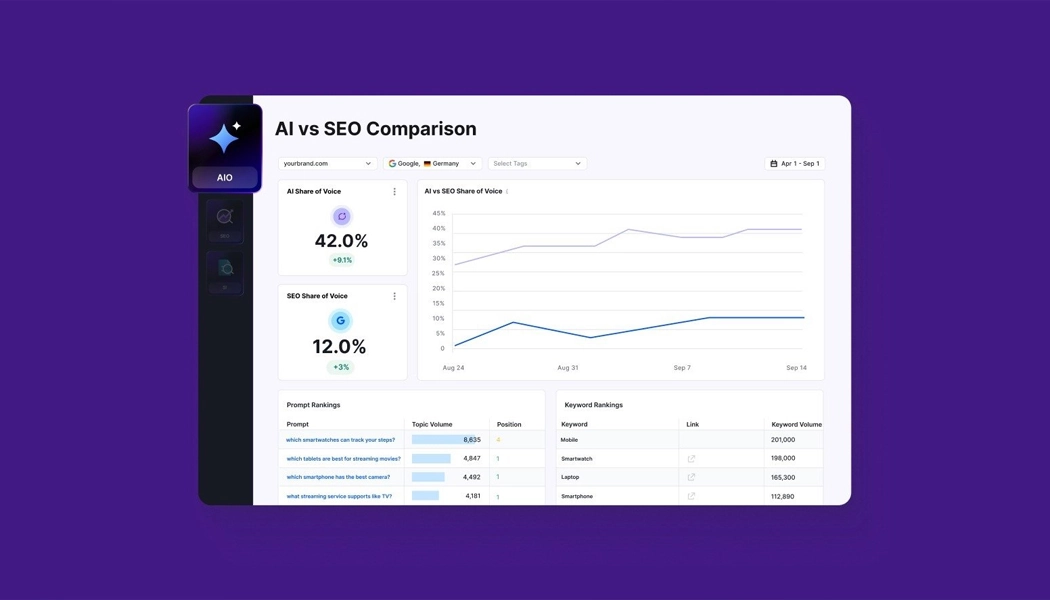
One of the trickier aspects of AI search is that standard ranking tools don’t track it. You won’t find your AI Overview appearances in Google Search Console the same way you’d find a position-one ranking. That said, there are a few practical ways to get a picture of how you’re performing.
The most straightforward starting point is manual checking. Search for the questions your target audience would ask in Google, ChatGPT, and Gemini, and see whether your brand or content appears in the answers. It’s not scalable, but it gives you a quick read on where you currently stand.
For traffic, GA4 can help. Tools like ChatGPT and Gemini do send referral traffic, and you can identify it by setting up a custom channel group in GA4 that captures sessions from AI platform domains. This won’t tell you how often you’re being cited, but it does tell you whether those citations are driving visits.
Tools like Semrush are also beginning to incorporate AI visibility tracking, which will make this easier to monitor at scale as the market matures. For now, a combination of manual checks and GA4 referral data gives you a solid baseline to work from.
Frequently Asked Questions About AI Search Optimisation
Is AI search optimisation the same as traditional SEO?
No, but the two are closely related. Traditional SEO focuses on ranking your website in a list of search results. AI search optimisation focuses on getting your content cited inside AI-generated answers. The underlying principles overlap, particularly around content quality and technical foundations, but AI search requires additional steps such as FAQ schema markup and writing in a more direct, question-answering format.
Does AI search affect my Google rankings?
Not directly, but the two influence each other. Pages that rank well in traditional Google search tend to be more likely to appear in Google AI Overviews. Optimising for AI search also improves your content quality in ways that can benefit your organic rankings.
How do I know if AI search is affecting my traffic?
You may notice a drop in click-through rates even when your rankings stay the same. This happens because AI Overviews answer the user’s question before they click on any result. Google Search Console can show you impression and click data, and tracking these alongside your rankings gives a clearer picture of how AI is affecting your traffic.
Which businesses should prioritise AI search optimisation?
Any business that relies on Google search for leads or website traffic should be paying attention to AI search. It’s particularly important for service businesses where potential customers ask research-led questions, for example “what is the best way to improve my Google rankings” or “how do I choose a digital marketing agency”. If your audience asks questions before buying, AI search is where you need to be visible.
Can small businesses compete in AI search?
Yes. AI search doesn’t automatically favour the biggest brands. It favours the most clearly written, well-structured, and credible content. A well-optimised blog post from a small agency can appear in an AI Overview ahead of a larger competitor if the content is more relevant and better organised. That’s one of the reasons we invest in content marketing as part of a broader SEO strategy.